 點評
點評 微信
微信 微博
微博⭐【邓洪説法】The "Black Box" in Truck Accident Cases: Securing Critical Engine Control Module Data Before It Is Routinely Destroyed by Trucking Companies | Deng Law Center
法律
來源:邓洪律师事务所
時間:12/08/2025
瀏覽: 4994
I. Firm Background & Case Focus
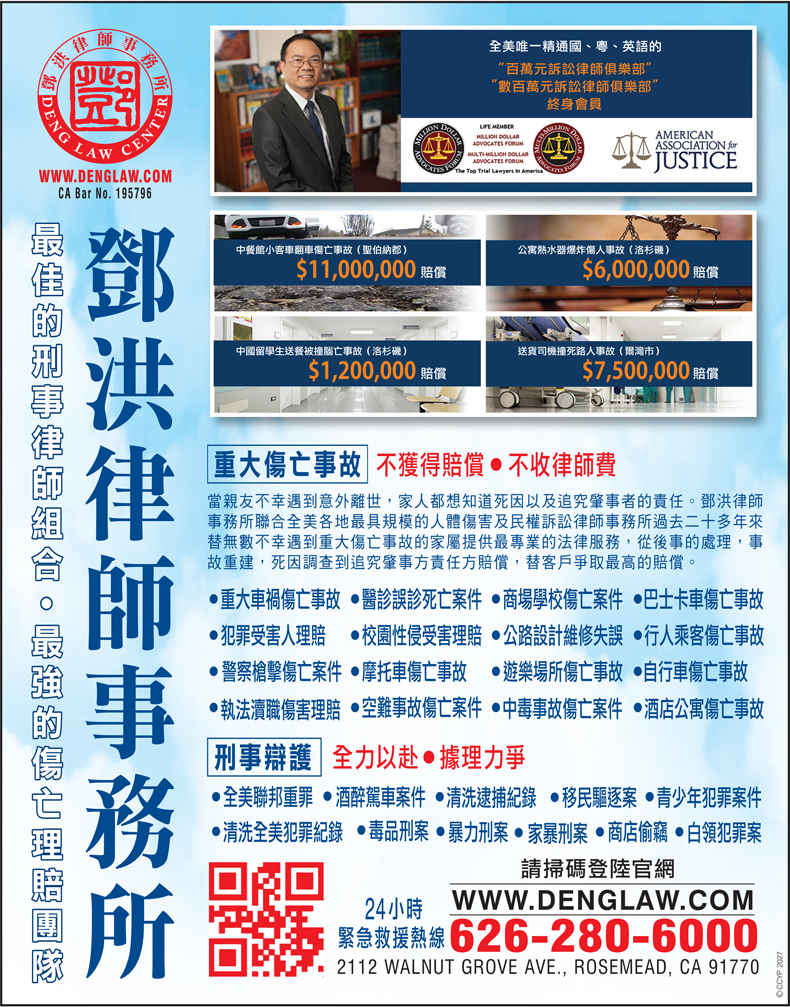
Deng Law Center, led by Daniel Deng Esq., represents victims and families in catastrophic truck and bus accident cases, leveraging deep investigative resources and litigation experience to handle complex claims against commercial carriers. Such accidents often result in severe injuries or fatalities due to the size and weight of commercial vehicles, and present unique legal and technical challenges. The firm’s trilingual capacity and focus on immigrant and Chinese-speaking communities ensure that even non-native English speakers can pursue justice when confronting powerful transportation companies and their insurers.
II. Market & Regulatory Landscape
Truck and bus accidents are governed by a dense framework of federal and state regulations. The Federal Motor Carrier Safety Regulations (FMCSR) control driver qualifications, hours-of-service rules, drug and alcohol testing, mandatory rest periods, vehicle maintenance, inspection schedules, and the use of electronic logging devices (ELDs). California adds additional requirements for intrastate carriers.
Proving liability frequently depends on uncovering violations such as driver fatigue, falsified logbooks, inadequate maintenance, negligent hiring, or failure to comply with inspection protocols. Critical evidence includes crash scene data, ELD and black box downloads, GPS records, pre-trip and post-trip inspection reports, dispatch communications, and vehicle maintenance logs. Securing this evidence early is essential to controlling case value and shaping trial strategy.
III. Competitive Positioning
Although many personal injury firms handle traffic collisions, few possess the regulatory sophistication or investigative resources required for large commercial vehicle litigation. Deng Law Center distinguishes itself by deploying accident reconstruction specialists, forensic analysts, and former law-enforcement investigators to gather and preserve evidence before trucking companies or insurers can shape the narrative. The firm’s Mandarin-, Cantonese-, and English-language capabilities further strengthen its accessibility to immigrant workers, bus passengers, tourists, and families who would otherwise struggle to navigate the legal system.
IV. Customer Behaviors
Victims often underestimate the complexity of truck and bus cases, expecting them to resemble ordinary car accidents. Many initially trust the carrier’s insurance adjusters, unaware that crucial evidence—ELD data, dashcam footage, inspection records—can be lost or overwritten if not preserved promptly. Immigrant and Chinese-speaking clients may delay taking legal action due to language barriers or unfamiliarity with U.S. regulations, which can significantly undermine a claim. Early bilingual legal consultation and structured intake are therefore critical.
V. Growth Opportunities
Truck and bus accidents represent a high-value growth sector for Deng Law Center. Opportunities include expanding bilingual digital resources explaining FMCSR rules, evidence preservation, and multi-party liability; creating rapid-response protocols for catastrophic collisions; and developing targeted intake tools that flag key issues such as driver fatigue, equipment failure, or possible punitive exposure. Partnerships with hospitals, rehabilitation centers, and immigrant-serving organizations can enhance referral channels and community trust.
VI. Operational & Compliance Insights
Effective litigation requires immediate action: issuing spoliation letters, securing black box and ELD data, engaging reconstruction experts, and collecting witness statements before memories fade. Public communications must avoid any guarantee of results, accurately convey the complexity of commercial carrier claims, and comply with state bar advertising rules and FMCSR confidentiality requirements.
VII. Conclusion & Recommended Focus
Truck and bus accident litigation demands specialized legal, investigative, and technical capabilities. Deng Law Center’s strategic priority should be expanding bilingual education, refining rapid-evidence-preservation intake systems, and positioning itself as the premier advocate for victims of serious commercial vehicle crashes—particularly within communities facing cultural or language barriers when pursuing high-stakes claims.
Deng Law Center, led by Daniel Deng Esq., represents victims and families in catastrophic truck and bus accident cases, leveraging deep investigative resources and litigation experience to handle complex claims against commercial carriers. Such accidents often result in severe injuries or fatalities due to the size and weight of commercial vehicles, and present unique legal and technical challenges. The firm’s trilingual capacity and focus on immigrant and Chinese-speaking communities ensure that even non-native English speakers can pursue justice when confronting powerful transportation companies and their insurers.
II. Market & Regulatory Landscape
Truck and bus accidents are governed by a dense framework of federal and state regulations. The Federal Motor Carrier Safety Regulations (FMCSR) control driver qualifications, hours-of-service rules, drug and alcohol testing, mandatory rest periods, vehicle maintenance, inspection schedules, and the use of electronic logging devices (ELDs). California adds additional requirements for intrastate carriers.
Proving liability frequently depends on uncovering violations such as driver fatigue, falsified logbooks, inadequate maintenance, negligent hiring, or failure to comply with inspection protocols. Critical evidence includes crash scene data, ELD and black box downloads, GPS records, pre-trip and post-trip inspection reports, dispatch communications, and vehicle maintenance logs. Securing this evidence early is essential to controlling case value and shaping trial strategy.
III. Competitive Positioning
Although many personal injury firms handle traffic collisions, few possess the regulatory sophistication or investigative resources required for large commercial vehicle litigation. Deng Law Center distinguishes itself by deploying accident reconstruction specialists, forensic analysts, and former law-enforcement investigators to gather and preserve evidence before trucking companies or insurers can shape the narrative. The firm’s Mandarin-, Cantonese-, and English-language capabilities further strengthen its accessibility to immigrant workers, bus passengers, tourists, and families who would otherwise struggle to navigate the legal system.
IV. Customer Behaviors
Victims often underestimate the complexity of truck and bus cases, expecting them to resemble ordinary car accidents. Many initially trust the carrier’s insurance adjusters, unaware that crucial evidence—ELD data, dashcam footage, inspection records—can be lost or overwritten if not preserved promptly. Immigrant and Chinese-speaking clients may delay taking legal action due to language barriers or unfamiliarity with U.S. regulations, which can significantly undermine a claim. Early bilingual legal consultation and structured intake are therefore critical.
V. Growth Opportunities
Truck and bus accidents represent a high-value growth sector for Deng Law Center. Opportunities include expanding bilingual digital resources explaining FMCSR rules, evidence preservation, and multi-party liability; creating rapid-response protocols for catastrophic collisions; and developing targeted intake tools that flag key issues such as driver fatigue, equipment failure, or possible punitive exposure. Partnerships with hospitals, rehabilitation centers, and immigrant-serving organizations can enhance referral channels and community trust.
VI. Operational & Compliance Insights
Effective litigation requires immediate action: issuing spoliation letters, securing black box and ELD data, engaging reconstruction experts, and collecting witness statements before memories fade. Public communications must avoid any guarantee of results, accurately convey the complexity of commercial carrier claims, and comply with state bar advertising rules and FMCSR confidentiality requirements.
VII. Conclusion & Recommended Focus
Truck and bus accident litigation demands specialized legal, investigative, and technical capabilities. Deng Law Center’s strategic priority should be expanding bilingual education, refining rapid-evidence-preservation intake systems, and positioning itself as the premier advocate for victims of serious commercial vehicle crashes—particularly within communities facing cultural or language barriers when pursuing high-stakes claims.
版权归原作者所有。如有侵权请联系我们,我们将及时处理。
(626) 280-6000
專精重大傷亡事故理賠及刑事辯護,聯合全美最強的人體傷害訴訟及專家團隊,為客戶爭取最高的賠償。
- 【邓洪説法】加州無證移民車禍理賠:不需擔心遣返或權益受損即可提告求償 | LAW OFFICE OF DANIEL DENG
- 【邓洪説法】保障無保險駕駛車禍中的乘客權益:即使肇事者無法賠償也能爭取精神賠償金 | LAW OFFICE OF DANIEL DENG
- 【邓洪説法】加州213號提案的DUI例外:無保險司機何時能索賠精神損失費 | LAW OFFICE OF DANIEL DENG
- 【邓洪説法】代位求償權與您的車禍和解金:為什麼健保公司想分一杯羹 | LAW OFFICE OF DANIEL DENG
- 【邓洪説法】控告汽車保險公司「惡意索賠」:保險公司無理拖延或拒絕理賠時該怎麼辦 | LAW OFFICE OF DANIEL DENG
打開微信,使用 “掃描QR Code” 即可將網頁分享到我的朋友圈。
分享本頁
打開微信,使用 “掃描QR Code” 即可將網頁分享到我的朋友圈。


